

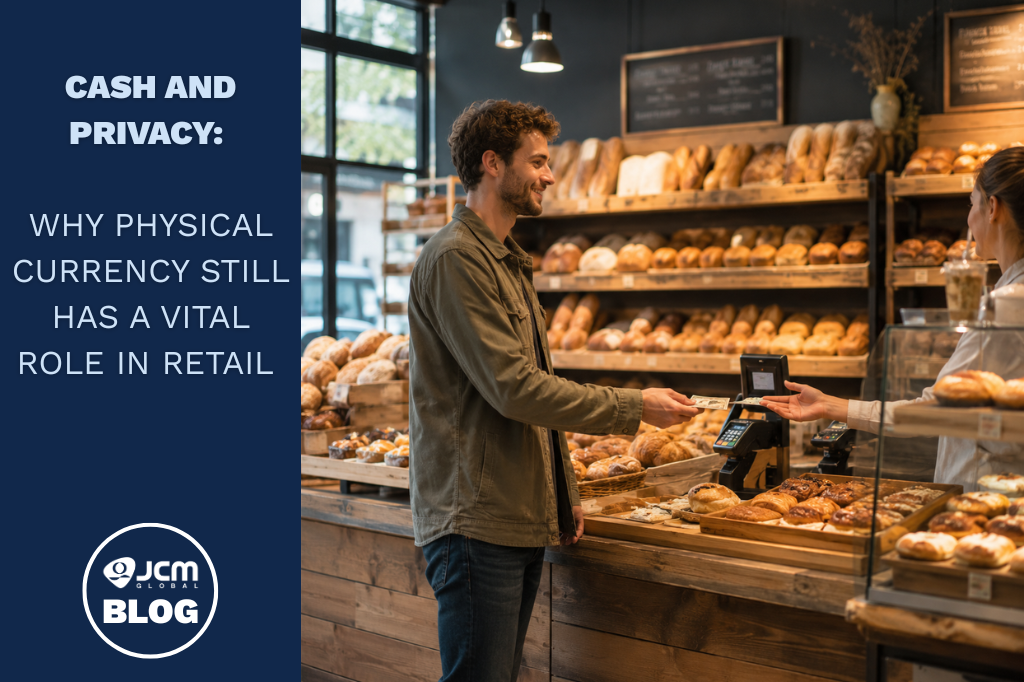
In an increasingly digital world, it would be easy to assume that cash is on the decline. Contactless payments, mobile wallets and app-based transactions continue to grow, reshaping how consumers interact with retailers across every sector. Yet within retail environments, cash remains essential. Far from being a legacy method, cash continues to play a critical and often underestimated role, offering benefits that digital alternatives alone cannot fully replicate. For retailers, the challenge is not choosing between cash and cashless, but understanding how to support both in a way that meets evolving customer expectations.
Cash as a Trusted Payment Method
Cash remains one of the most widely recognised and trusted forms of payment globally. It requires no onboarding, no connectivity and no reliance on third-party systems. Transactions are immediate and tangible. There is no waiting for authorisation, no system dependency, and no interruption to the flow of a purchase. In busy retail environments, where speed and reliability are essential, this simplicity is a significant advantage. Cash also ensures universal accessibility. It does not exclude customers who may be less comfortable with digital tools or who simply prefer traditional methods. In a diverse customer base, maintaining that accessibility is key.
Privacy and Consumer Choice
As retail becomes increasingly data-driven, concerns around privacy are growing. Digital transactions are often tracked, analysed and used to build detailed consumer profiles. While this can support personalisation and targeted marketing, it also raises important questions around how much data is collected and how it is used. Cash offers an alternative. Payment privacy and anonymous transactions are essential for protecting personal data and giving individuals control over their financial lives, including everyday retail purchases. By enabling transactions without creating a digital footprint, cash helps preserve financial freedom and limits the potential misuse of consumer behaviour data. Ultimately, safeguarding payment privacy supports a more balanced retail environment, where customers can shop, spend and participate in the economy without undue surveillance or influence. This reinforces a broader point: choice matters. Retailers that offer both cash and digital payment options are better positioned to meet a wider range of customer preferences, building trust and long-term loyalty in the process.
Operational Resilience
From an operational perspective, cash continues to play a vital role in maintaining resilience. Digital systems, while highly efficient, are not immune to disruption. Network outages, system failures or connectivity issues can all impact transactions and, ultimately, revenue. Cash provides a reliable fallback. In high-volume retail environments, the ability to continue trading without interruption is critical. Supporting both physical and digital payments creates a more robust and adaptable operation—protecting both customer experience and business continuity.
Supporting Conscious Spending
Cash can also influence how customers manage their spending. Unlike digital balances, which can feel abstract, physical currency provides a clear and immediate sense of value. Customers can see exactly what they are spending, which can encourage more deliberate purchasing decisions. While digital tools offer their own advantages, cash remains an important option for those who prefer a more tangible and transparent way to manage their finances.
The Evolving Role of Cash
The role of cash is evolving alongside the wider retail landscape. Rather than disappearing, it is becoming more integrated into modern retail systems. Advances in cash handling technology are enabling retailers to improve efficiency, enhance security and reduce manual processes, while maintaining the benefits of physical currency. At the same time, cash continues to coexist with digital payment methods. Customers are no longer choosing one or the other—they are choosing what suits them in the moment. This shift towards hybrid payment environments reflects a broader trend across retail: flexibility is no longer optional—it is expected.
What This Means for Retailers
For retailers, the implications are clear. Supporting multiple payment methods is now essential. Customers expect the freedom to choose how they pay, and businesses must be equipped to deliver that flexibility. At the same time, there is a need to balance innovation with inclusivity. While investing in digital solutions is important, it should not come at the expense of those who rely on or prefer cash. Reliable, future-ready cash handling solutions ensure that physical currency remains efficient, secure and easy to manage, even as payment ecosystems continue to evolve.
Conclusion
Cash remains a vital part of the present and future of retail. In a landscape shaped by data, technology and convenience, cash continues to offer something uniquely valuable: privacy, reliability and choice. The most successful retailers will not see this as a binary decision. Instead, they will recognise that the future lies in integration—creating environments where cash and digital payments work side by side to deliver the best possible customer experience. Because ultimately, cash isn’t just a payment method. It’s about giving people control over how they choose to pay.
 Deutsch
 Español