

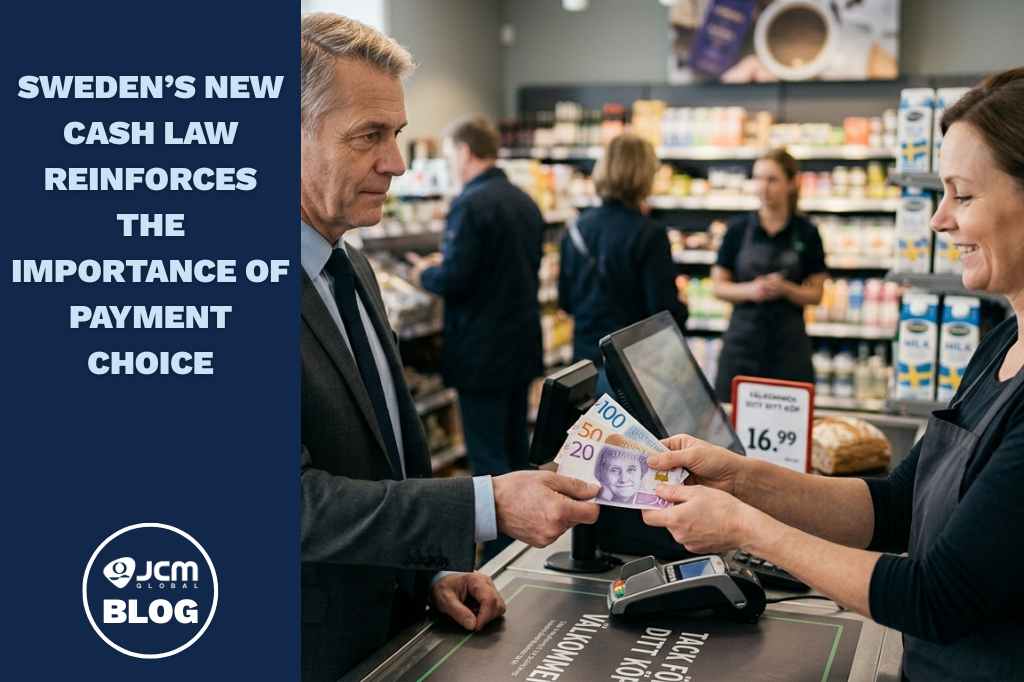
For many years, Sweden has been regarded as one of the world’s leading examples of a cashless society. From retail stores and restaurants to public transport, digital payments have become the preferred method of transaction for millions of consumers. Yet, despite this rapid adoption of electronic payments, the Swedish Government has now introduced legislation requiring many retailers to continue accepting cash.
The new law, which came into effect on 1 July 2026, requires grocery stores and pharmacies to accept cash payments, with only limited exceptions. While the move may appear surprising for a country so often associated with digital innovation, it reflects a growing recognition that payment choice remains essential for consumers, businesses and society as a whole.
A More Balanced Payments Landscape
The debate surrounding cash versus digital payments is often presented as an either-or decision. In reality, the most resilient payment ecosystems are those that support multiple payment methods, allowing consumers to choose the option that best suits their circumstances.
Cash continues to provide an important safety net during network outages, cyber incidents and other disruptions that can affect electronic payment systems. It also remains an essential payment method for many elderly customers, vulnerable groups and those who simply prefer to manage their spending using physical currency.
Sweden’s latest legislation acknowledges that while digital payments continue to grow, eliminating cash altogether could create unintended consequences for both consumers and businesses.
Consumer Choice Matters
Retailers are increasingly focused on creating convenient customer experiences, and that includes offering payment flexibility.
Consumers expect to be able to pay using the method that works best for them, whether that’s cash, debit card, mobile wallet or another digital solution. Restricting payment options can create unnecessary friction and, in some cases, discourage purchases altogether.
By maintaining the ability to accept cash, businesses demonstrate that they are serving the widest possible customer base while ensuring that nobody is excluded from everyday transactions.
Supporting Business Continuity
Payment resilience has become an increasingly important consideration across Europe.
Recent outages affecting banking networks, payment processors and telecommunications infrastructure have highlighted the importance of maintaining alternative payment methods when digital systems become unavailable.
Cash provides businesses with an additional layer of operational resilience, helping retailers continue trading when electronic payment systems experience interruptions.
For organisations operating in sectors where uninterrupted customer service is essential, maintaining efficient cash handling processes forms an important part of overall business continuity planning.
Cash Still Requires Smart Management
While the debate often focuses on whether businesses should accept cash, an equally important consideration is how that cash is managed.
Modern cash management has evolved significantly beyond manual counting and reconciliation. Today’s retailers, gaming venues, hospitality businesses and financial institutions are looking for solutions that improve efficiency, reduce manual handling and provide greater visibility over cash operations.
Automated note validation, secure cash recycling, intelligent deposit systems and advanced reporting tools help businesses reduce labour requirements while improving accuracy and security.
Rather than viewing cash as an operational burden, many organisations are investing in technologies that streamline the entire cash cycle.
Technology Supporting Every Payment Choice
The continued acceptance of cash does not represent a step backwards. Instead, it reflects a more balanced approach to payments, where digital innovation and physical currency work together.
For organisations handling significant cash volumes, technology plays an increasingly important role in ensuring that cash can be processed securely, efficiently and cost-effectively.
Solutions that automate validation, reduce shrinkage and improve reconciliation allow businesses to continue supporting cash payments without increasing operational complexity.
Looking Ahead
Sweden’s new legislation serves as a reminder that the future of payments is unlikely to be defined by a single payment method.
Instead, successful businesses will be those that offer flexibility, resilience and choice while investing in technologies that simplify payment operations behind the scenes.
At JCM Global, we understand that every business has different operational requirements. Whether supporting cash acceptance through industry-leading note validation technology or helping organisations improve the efficiency of their cash management processes, our focus remains the same: delivering secure, reliable solutions that help businesses meet the evolving needs of both their customers and their operations.
As payment technologies continue to evolve, one principle remains unchanged—giving customers choice while providing businesses with the tools to manage every transaction efficiently will continue to be a winning strategy.
 Deutsch
 Español