

Why Total Cost of Ownership Matters More Than Purchase Price
When retailers evaluate self-checkout or cash handling solutions, the conversation often starts — and sometimes ends — with the purchase price.
But in today’s retail environment, where margins are tight and operational efficiency matters more than ever, the real question is not simply:
“What does it cost to buy?”
It is:
“What will it cost to operate reliably over the next five years?”
That is where Total Cost of Ownership (TCO) becomes critical.
The Hidden Costs Retailers Often Underestimate
On the surface, two solutions may appear very similar. Both accept notes. Both recycle cash. Both integrate into the store environment. One solution may even appear significantly cheaper at first glance.
However, the purchase price typically represents only a small fraction of the true lifecycle cost.
Retailers frequently underestimate costs related to:
Over several years, these operational factors can significantly outweigh any upfront savings.
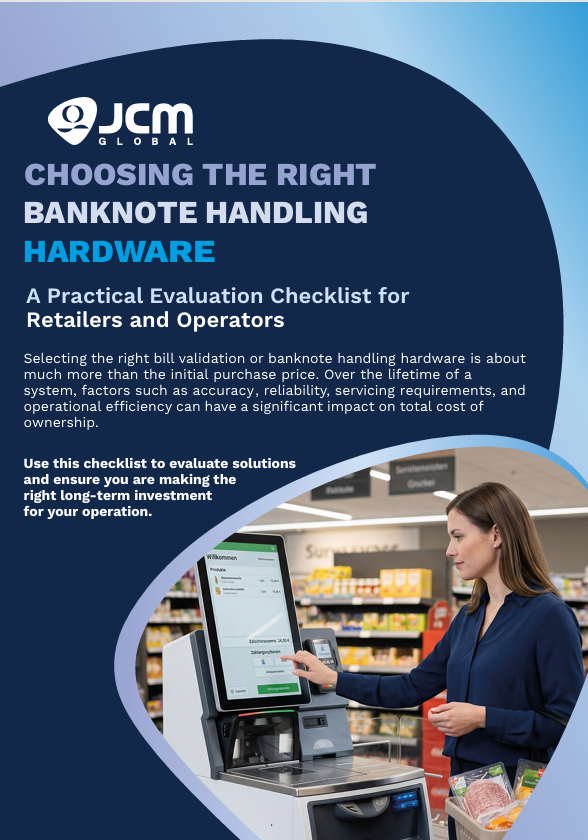
Before making a decision, retailers should look beyond the upfront price and evaluate the long-term operational impact. Our “Retail Cash Automation Checklist” outlines the key factors that are often overlooked during the buying process — but can significantly influence total cost of ownership over time.
Why Usage Volume Changes Everything
In a lower-volume environment processing around 100,000 transactions annually, operational differences between two solutions may appear relatively small.
However, in high-volume retail environments processing closer to 1,000,000 transactions per year, even minor differences in reliability, maintenance frequency or downtime can create a significant operational and financial impact over time.
Additional technician visits, replacement parts, staff intervention and checkout downtime all scale with transaction volume. What may initially seem like a small performance gap can ultimately result in substantially higher lifecycle costs, reduced operational efficiency and lower customer satisfaction.
This is where long-life, high-reliability cash handling technology becomes particularly valuable. Solutions engineered for extended operational lifecycles can maintain stable performance for many years, even under demanding daily usage conditions.
Reliability Becomes Critical at High Transaction Volumes
The impact of reliability differences becomes significantly more visible over time — especially in demanding retail environments with continuous daily usage and high customer traffic.
What may initially appear to be only a small technical difference between two solutions can develop into a substantial operational and financial gap over several years of operation.
Solutions designed for long-term durability and stable note handling performance can continue operating efficiently for significantly longer periods before major service interventions or failures occur. In contrast, lower-end alternatives may require maintenance, replacement parts or technician visits much earlier and more frequently.
For retailers, this directly affects:
In high-usage environments, these differences compound rapidly. A solution that delivers consistent reliability over many years helps minimise operational disruption, maintain customer flow and reduce total lifecycle cost.
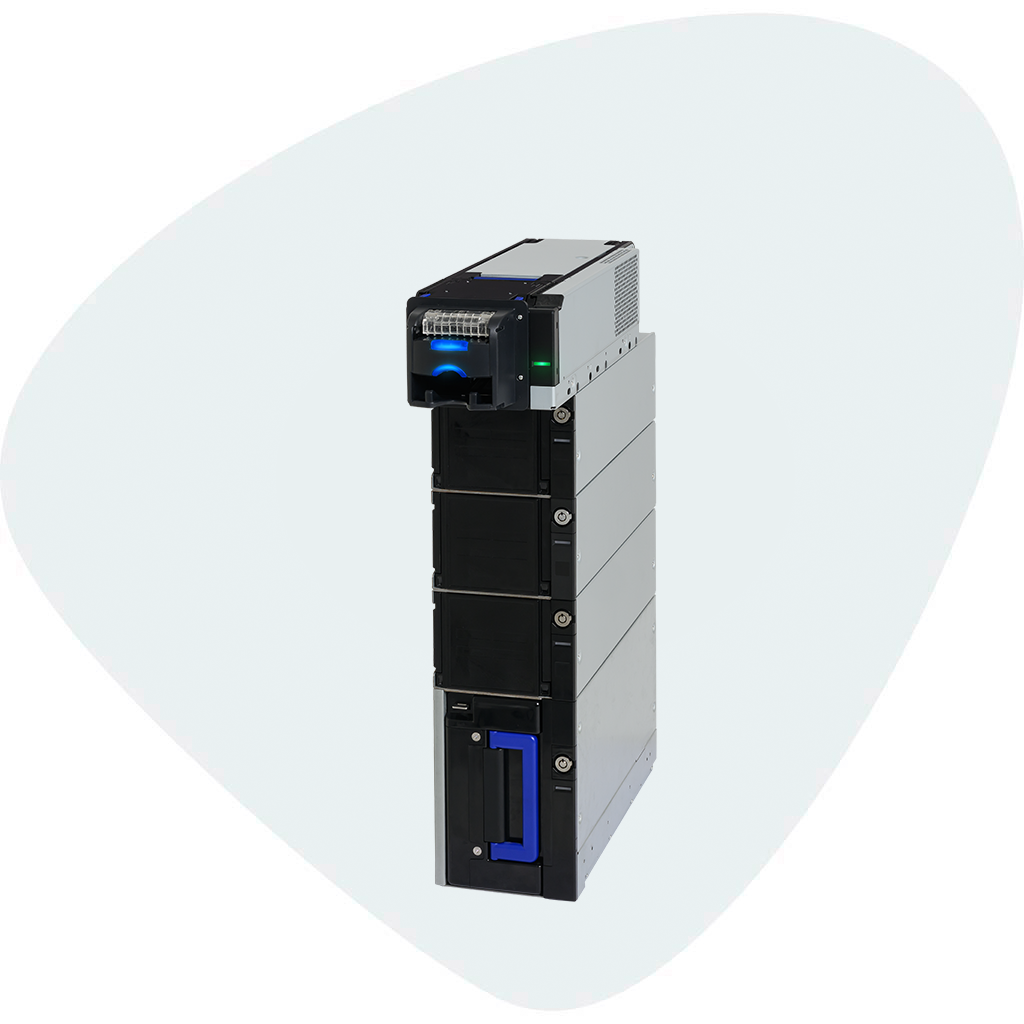 Advanced cash handling technologies such as the MRX-R from JCM have a Lifecycle of 2.500.000 notes. Even in demanding retail environments with high daily transaction volumes, this can translate into many years of stable operation before major failures or replacement requirements occur.
Compared to lower-end alternatives that may require service interventions or component replacement significantly earlier, the long operational lifespan of high-performance solutions can have a major impact on uptime, maintenance cost and overall customer experience.
This is why the lowest purchase price does not always represent the lowest long-term cost. Investing in a highly reliable solution can often deliver substantially greater operational value, uptime and customer satisfaction over the lifetime of the system.
Speed Is Not Just Convenience – It’s Revenue Protection
High-speed note validation and recycling reduce queue times and improve throughput, particularly during peak trading hours. Slower systems create bottlenecks that impact both customer experience and transaction capacity.
Equally important is accuracy. Advanced sensing technology that reduces false rejections and counterfeit acceptance protects revenue and reduces manual intervention.
Each avoided service call and each minute saved at checkout contributes directly to lower operational costs and a smoother customer experience.
Downtime Is More Expensive Than Many Retailers Expect
In self-checkout environments, uptime is essential. Every out-of-service unit increases pressure on staff and negatively impacts customer flow.
Frequent maintenance, note jams or poor note handling performance can quietly reduce operational efficiency throughout the day. Over time, even small reliability gaps compound into significant hidden costs.
Modern cash recycling and validation technology is designed to minimise these interruptions by improving note handling stability, reducing false rejections and lowering maintenance requirements.
For customers, the impact is immediate. Long queues, unavailable checkout stations and interrupted transactions can negatively affect the shopping experience and reduce customer satisfaction.
Each avoided service call and each minute of avoided downtime contributes directly to lower operational cost and more reliable store performance.
Operational Efficiency: The Multiplier Effect
Time savings are often overlooked in TCO calculations.
When employees are repeatedly called to resolve note jams, verify transactions or refill cash modules, productivity suffers. That labour cost is rarely attributed directly to the hardware decision — yet it is a direct operational consequence of it.
Modern cash recycling and validation systems can help retailers:
These operational efficiencies multiply over time and can have a measurable impact on store profitability.
The Five-Year Perspective
A self-checkout or cash handling solution should not be evaluated on purchase price alone. It should also be assessed based on:
Over a five-year horizon, the difference between a lower-cost solution and a high-performance, highly reliable solution can become substantial.
Retailers who shift their evaluation model from upfront CapEx to long-term lifecycle value often discover that the “cheapest” option is rarely the most economical.
Moving the Conversation Forward
As retail continues to evolve, investment decisions must increasingly reflect long-term operational realities rather than short-term acquisition costs alone.
The right solution is not simply the one that costs less today — it is the one that delivers consistent uptime, reduces operational interruptions, protects revenue and supports efficient store operations for years to come.
Total Cost of Ownership is no longer a secondary consideration.
It is becoming one of the most important factors in evaluating future-ready retail technology.
Download the Retail Cash Automation Checklist to evaluate the hidden operational costs, performance factors, and long-term considerations that should shape your buying decision.
 Deutsch
 Español